


 Stone coated roofing sheets come in a range of thicknesses to meet different construction needs. Generally, their thickness varies from 0.3mm to 0.8mm, with each thickness having its unique application scenarios.
Among these, 0.5mm Thickness Stone Coated Steel Sheets have gained significant popularity in the market. This thickness strikes a good balance between durability and weight, making it suitable for a wide range of buildings. It is often used in residential houses, small commercial buildings, and even some low-rise industrial structures. The 0.5mm thickness provides adequate strength to withstand normal weather conditions while not adding excessive weight to the roof structure.
When comparing different thicknesses of stone coated roofing sheets (e.g., 0.4mm, 0.5mm, 0.6mm), 0.5mm Thickness products stand out as a versatile option. They offer better durability than 0.4mm sheets and are more cost-effective and lighter than 0.6mm sheets, making them a preferred choice for many projects.
How thick should roofing sheets be?
The appropriate thickness of roofing sheets depends on several key factors. Building height is one such factor; taller buildings are more exposed to strong winds, so thicker roofing sheets may be needed to ensure stability. Local climate also plays a crucial role. Areas with frequent storms, heavy snow, or extreme temperatures require thicker sheets to resist damage. Roof slope is another consideration; steeper slopes may allow for slightly thinner sheets as water and snow slide off more easily, while flatter roofs need thicker sheets to bear more weight.
For different building types, the recommended thickness ranges vary. Residential buildings usually work well with roofing sheets between 0.4mm and 0.6mm. 0.5mm Thickness Stone Coated Steel Sheets are a perfect fit here, as they provide enough protection for homes without being too heavy. Commercial buildings, which often have larger roof areas and may face more foot traffic during maintenance, typically require sheets in the 0.5mm to 0.7mm range. Industrial buildings, especially those with heavy machinery or where the roof may need to support additional loads, often opt for sheets 0.6mm and above.
0.5mm Thickness stone metal tiles are a suitable choice for certain buildings for several reasons. They offer sufficient strength to handle the daily wear and tear of residential and small commercial use. Their weight is manageable for most roof structures, reducing the need for excessive reinforcement. Additionally, they provide good value for money, offering a balance between performance and cost.
Using roofing sheets with inappropriate thickness can lead to various problems. If the thickness is insufficient, the sheets may not be durable enough, easily appear cracks or damage over time, leading to leaks and the need for early replacement. On the contrary, excessive thickness can result in excessive weight on the roof structure, which may require additional support and increase construction costs. It can also make installation more difficult.
What size are stone coated roofing sheets?
Stone coated roofing sheets are available in a variety of sizes to accommodate different roof designs and installation requirements. Common lengths include 1.34m,1.8m, 2.4m, 3m and 6m, while typical widths range from 0.42m to 1.2m. These standard sizes make them easy to transport and handle during installation.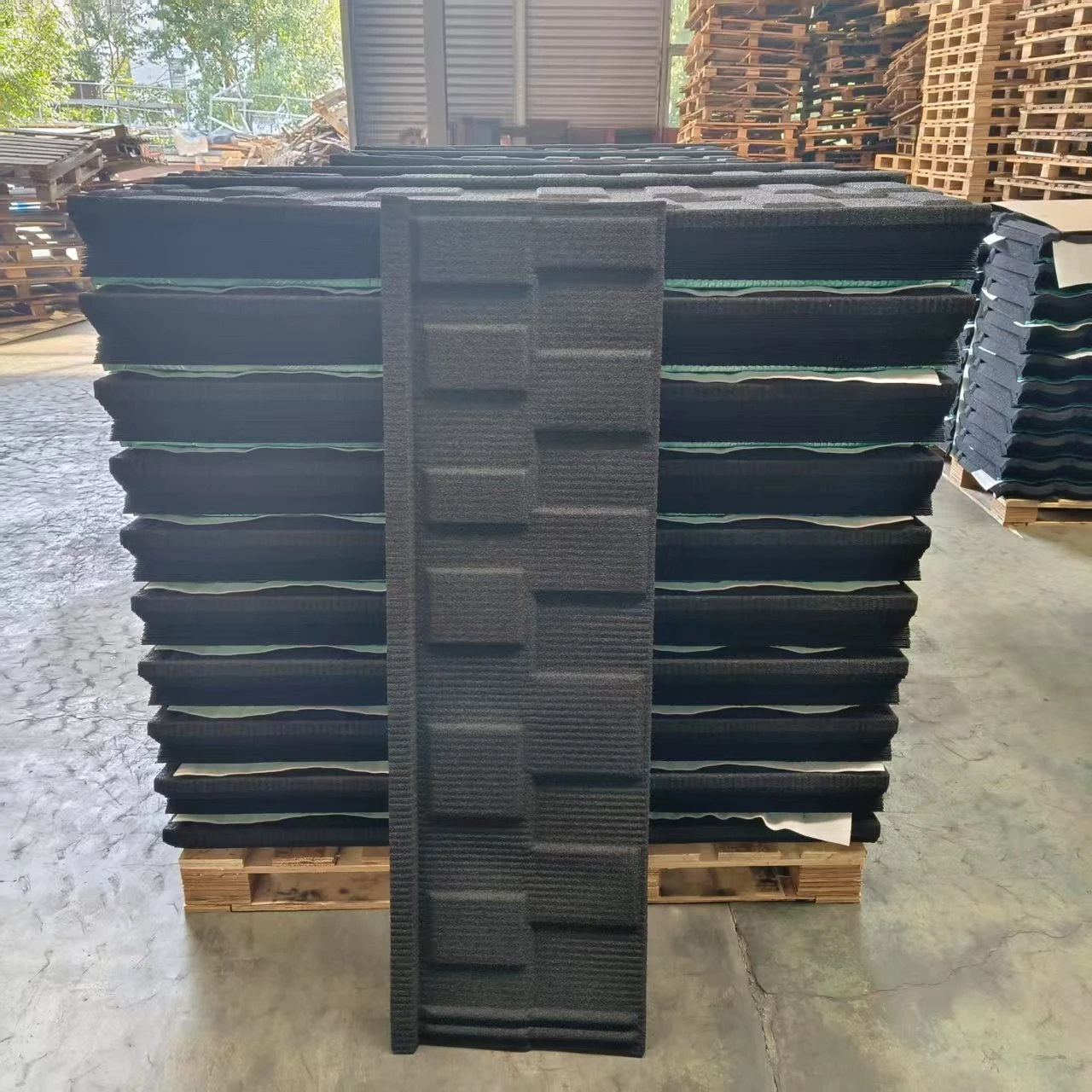
The size of the roofing sheets has a direct impact on installation efficiency. Larger sheets can cover more area in a shorter time, reducing the number of seams and thus the installation time. However, they may be more challenging to maneuver on smaller roofs or in tight spaces. Smaller sheets, on the other hand, are easier to handle but require more time to install due to the greater number of pieces needed.
0.5mm Thickness Stone Coated Steel Sheets are compatible with most of these common sizes. Whether it's a 1.34m length with a 0.42m width or a 3m length with a 0.9m width, the 0.5mm thickness works well, ensuring that the sheets maintain their structural integrity and performance. This compatibility allows for flexibility in roof design.
Custom size options are also available for stone coated roofing sheets, but there are some considerations. Custom sizes may increase the cost and lead time for production. It's important to ensure that the custom size is compatible with the roof structure and installation methods. For 0.5mm Thickness products, custom sizes can be a good option when a specific design requires it, but it's essential to consult with the manufacturer to ensure feasibility.
What are the disadvantages of stone coated roofing?
While stone coated roofing has many advantages, it also has some disadvantages. One of the main issues is related to weight. Compared to other roofing materials such as asphalt shingles or metal sheets, stone coated roofing is heavier. This can put additional stress on the roof structure, requiring stronger support during construction.
Another disadvantage is the higher initial cost. Stone coated roofing sheets, including 0.5mm Thickness Stone Coated Steel Sheets, have a higher upfront price compared to materials like asphalt. This can be a deterrent for some homeowners or builders with tight budgets, even though the long-term durability may offset the cost.
 Maintenance challenges are also specific to stone coated roofing. The stone coating can sometimes chip or crack, especially if subjected to heavy impacts. Repairing these chips requires careful handling to match the color and texture of the existing coating, which can be time-consuming and costly. Additionally, debris can accumulate in the grooves of the sheets, requiring regular cleaning to prevent water buildup.
Stone coated roofing also has limitations in extreme weather conditions. In areas with very high winds, there is a risk of the sheets being lifted if not properly installed. Heavy snowfall can put extra weight on the roof, and if the snow doesn't slide off quickly, it may cause stress on the sheets.
What is the standard thickness of a roof sheet?
The standard thickness of a roof sheet varies depending on the type of material and the industry standards in different regions. Globally, for metal roof sheets, the standard thickness typically ranges from 0.3mm to 0.8mm. This range is based on factors such as structural requirements, durability, and cost-effectiveness.
For stone coated roofing sheets, which are a type of metal roof sheet with a stone coating, the standard thickness also falls within this range. The industry standards take into account the additional weight of the stone coating and ensure that the base metal thickness provides sufficient support. 0.5mm Thickness Stone Coated Steel Sheets are well within the standard range and meet the requirements of most regional standards.
In different regions, there may be slight variations in the standard thickness. For example, in some areas with more severe weather conditions, the recommended standard thickness may be on the higher end of the range to ensure better durability. In milder climates, a slightly thinner thickness may be acceptable. However, 0.5mm Thickness Stone Coated tiles are generally recognized as a standard option that meets the needs of many regions.


