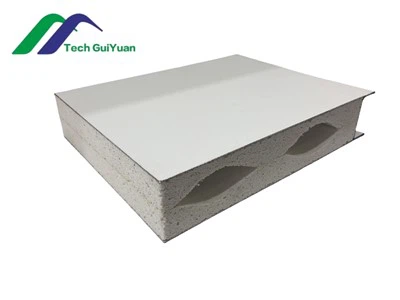
Hey there! As a supplier of clean room sandwich panels, I've been getting a lot of questions lately about what exactly goes into these panels. So, I thought I'd break it down for you and give you the lowdown on the main components of a clean room sandwich panel.
Outer Layers
The outer layers of a clean room sandwich panel are super important. They act as the first line of defense, protecting the inner core and giving the panel its overall look and durability. There are a few different materials commonly used for these outer layers.
Metal Sheets
Metal sheets are a popular choice, especially when it comes to industrial and commercial clean rooms. Stainless steel is a top pick because it's corrosion-resistant, easy to clean, and can withstand a lot of wear and tear. Aluminum is another option. It's lightweight, which makes the panels easier to handle and install. Plus, it's also resistant to rust, so it's great for environments where moisture might be an issue.
If you're interested in high - quality outer layer options for your clean room, you can check out our Purification Board for Room. It offers excellent protection and is designed to meet the strict requirements of clean room environments.
Plastic Sheets
Plastic sheets are also used, especially in cases where you need a more flexible or cost - effective solution. PVC (polyvinyl chloride) is a common plastic used for the outer layers. It's affordable, easy to work with, and can be made in a variety of colors. Acrylic is another option. It's transparent, which can be useful if you need to see what's going on inside the clean room. And it has good impact resistance, so it can stand up to minor bumps and knocks.
Inner Core Materials
The inner core of a clean room sandwich panel is what really gives it its insulation and structural properties. There are several types of core materials, each with its own advantages.
Polystyrene (EPS)
Polystyrene is a lightweight and cost - effective core material. It has good insulation properties, which helps to keep the temperature inside the clean room stable. EPS is also easy to cut and shape, making it a popular choice for custom - sized panels. However, it's not the most fire - resistant material, so it might not be suitable for all clean room applications.
Polyurethane (PUR)
Polyurethane is a high - performance core material. It has excellent insulation properties, better than EPS in most cases. It's also more fire - resistant and has good mechanical strength. PUR - cored panels are often used in clean rooms where energy efficiency and fire safety are top priorities.
Rock Wool
Rock wool is a great option if you're looking for a fire - resistant and sound - insulating core material. It's made from natural rock fibers, so it's environmentally friendly. Rock wool can withstand high temperatures without melting or releasing harmful gases, which is crucial in a clean room setting. Our Rock Wool Sandwich Wall Panel uses high - quality rock wool, providing both safety and insulation benefits.
Adhesives and Sealants
Adhesives and sealants play a crucial role in holding the different layers of the clean room sandwich panel together and ensuring a tight seal.
Adhesives
The adhesive used to bond the outer layers to the inner core needs to be strong and durable. It should be able to withstand temperature changes, humidity, and mechanical stress. Epoxy adhesives are commonly used because they have high bonding strength and good chemical resistance. They can also be formulated to be low - outgassing, which is important in a clean room environment to prevent contamination.
Sealants
Sealants are used to fill the gaps between the panels and around the edges. They prevent air, dust, and moisture from entering the clean room. Silicone sealants are a popular choice because they are flexible, weather - resistant, and have good adhesion. They can be used in a variety of applications, from sealing joints between panels to sealing around windows and doors.
Connection Systems
Connection systems are what allow the clean room sandwich panels to be joined together to form a complete clean room structure.
Tongue - and - Groove Systems
Tongue - and - groove systems are a common way to connect panels. The tongue on one panel fits into the groove on another panel, creating a tight and secure connection. This system is easy to install and provides good alignment between the panels. It also helps to prevent air and dust leakage between the panels.
Click - Lock Systems
Click - lock systems are becoming more popular because they are even easier to install. The panels simply click together, and there's no need for additional fasteners in some cases. This can save time and labor during the installation process.
Surface Finishes
The surface finish of a clean room sandwich panel is important for both aesthetic and functional reasons.
Smooth Finishes
Smooth finishes are easy to clean and maintain. They prevent dust and dirt from sticking to the surface, which is crucial in a clean room environment. A smooth finish can also give the clean room a more professional and modern look.
Textured Finishes
Textured finishes can provide additional grip, which can be useful in areas where there might be a risk of slipping. They can also hide minor scratches and imperfections, making the panels look better over time.
If you're interested in a wide range of clean room panel options, including different surface finishes and connection systems, check out our Manual Clean Room Panel. It offers a lot of flexibility and can be customized to meet your specific needs.
Quality Control and Standards
When it comes to clean room sandwich panels, quality control is of the utmost importance. The panels need to meet strict standards to ensure they are suitable for use in clean room environments.


Testing
Panels are tested for a variety of properties, including fire resistance, insulation, airtightness, and surface cleanliness. Fire resistance testing is crucial to ensure the safety of the clean room in case of a fire. Insulation testing ensures that the panels are effective at maintaining the desired temperature inside the clean room. Airtightness testing helps to prevent the entry of dust and contaminants, and surface cleanliness testing ensures that the panels do not release particles or chemicals into the clean room environment.
Certifications
Many clean room sandwich panels carry certifications from recognized organizations. These certifications are a sign that the panels have been tested and meet certain quality and performance standards. Look for panels that have certifications such as ISO 14644 (for clean room classification) and UL (Underwriters Laboratories) for fire safety.
Why Choose Our Clean Room Sandwich Panels?
As a supplier, we take pride in offering high - quality clean room sandwich panels. We use the best materials and manufacturing processes to ensure our panels meet the strictest standards. Our panels are designed to provide excellent insulation, fire resistance, and cleanliness.
We also offer a wide range of options, from different outer layer materials to various core materials. This allows you to customize the panels to fit your specific clean room requirements. Whether you need a small clean room for a laboratory or a large industrial clean room, we have the right solution for you.
If you're in the market for clean room sandwich panels, I encourage you to get in touch with us to discuss your needs. We can provide you with detailed information, samples, and a competitive quote. Our team of experts is always ready to help you make the best choice for your clean room project.
References
- ASTM International. (20XX). Standard test methods for clean room sandwich panel properties.
- ISO. (20XX). ISO 14644 - Cleanrooms and associated controlled environments.
- UL. (20XX). UL standards for fire - resistant building materials.