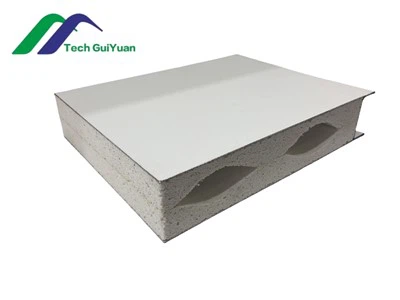
Hey there! As a supplier of clean room sandwich panels, I often get asked about the fire protection mechanism of these panels. It's a crucial topic, especially when it comes to ensuring the safety of clean rooms, which are used in various industries like pharmaceuticals, electronics, and food processing. So, let's dive right in and explore what makes these panels fire-resistant.
Understanding Clean Room Sandwich Panels
First off, let's quickly go over what clean room sandwich panels are. They're basically composite panels made up of two outer layers and a core material in between. The outer layers are usually made of materials like metal (such as steel or aluminum) or high - performance plastics, which provide strength and durability. The core material can vary, and it plays a significant role in the panel's fire protection capabilities.
The Role of Core Materials in Fire Protection
Rock Wool Core
One of the most common core materials used for fire - protection in clean room sandwich panels is rock wool. Rock wool is made from natural minerals like basalt and diabase, which are melted and spun into fibers. These fibers create a dense, porous structure that has excellent insulation properties.
When exposed to fire, rock wool acts as a thermal barrier. It can withstand high temperatures for an extended period without melting or burning. The porous structure of rock wool traps air, which is a poor conductor of heat. This means that heat transfer through the panel is significantly reduced. For example, Rock Wool Sandwich Wall Panel uses this type of core, making it a great choice for clean rooms where fire safety is a top priority.
Mechanical Silicon Rock Core
Another interesting core material is mechanical silicon rock. This material is engineered to have high fire - resistance and insulation properties. It's made by combining silicon - based materials with other additives to create a stable and heat - resistant structure.
The mechanical silicon rock core in Mechanical Silicon Rock Clean Room Panel can resist the spread of fire by preventing the transfer of heat and flames. It also has good mechanical strength, which means it can maintain its integrity during a fire, helping to prevent the collapse of the clean room structure.
Fire - Rated Purification Panels
Fire-rated Purification Panels are specifically designed to meet strict fire safety standards while also providing a clean and controlled environment. These panels are often used in clean rooms where the risk of fire is relatively high, such as in areas with electrical equipment or flammable materials.
These panels are tested and certified to meet certain fire - resistance ratings, such as ASTM E119 or UL 263 in the United States. The ratings indicate how long the panel can withstand fire exposure before it fails to perform its intended function, such as preventing the spread of fire or maintaining its structural integrity.


Additional Fire Protection Features
Intumescent Coatings
Some clean room sandwich panels are coated with intumescent coatings. These coatings are designed to expand when exposed to heat, forming a thick, insulating char layer. This char layer acts as a barrier, protecting the core material and the outer layers of the panel from the heat of the fire.
Sealing and Joint Design
Proper sealing and joint design are also essential for fire protection. The joints between panels need to be sealed to prevent the passage of fire, smoke, and hot gases. Special fire - rated sealants and gaskets are used to ensure a tight seal. Additionally, the design of the joints can help to prevent the spread of fire by creating a physical barrier.
Real - World Applications and Benefits
In industries like pharmaceuticals, a fire in a clean room can be catastrophic. It can destroy valuable equipment, contaminate products, and put the lives of workers at risk. By using fire - resistant clean room sandwich panels, companies can significantly reduce these risks.
For example, in a pharmaceutical manufacturing clean room, the use of Fire-rated Purification Panels can ensure that in the event of a fire, the spread of flames and smoke is contained. This gives workers more time to evacuate safely and allows the fire department to respond effectively.
In the electronics industry, where clean rooms are used for semiconductor manufacturing, fire - resistant panels can protect sensitive equipment from heat damage. This helps to minimize production downtime and prevent costly losses.
Conclusion
So, to sum it up, the fire protection mechanism of clean room sandwich panels is a combination of the properties of the core material, additional features like intumescent coatings, and proper sealing and joint design. Whether it's the rock wool core, mechanical silicon rock core, or other specialized materials, these panels are designed to provide reliable fire protection in clean room environments.
If you're in the market for clean room sandwich panels and are concerned about fire safety, we're here to help. We offer a wide range of high - quality panels with excellent fire - resistance properties. Don't hesitate to reach out to us for more information or to discuss your specific requirements. We'd be happy to work with you to find the perfect solution for your clean room needs.
References
- ASTM International. (2023). ASTM E119 - Standard Test Methods for Fire Tests of Building Construction and Materials.
- Underwriters Laboratories. (2023). UL 263 - Standard for Fire Tests of Building Construction and Materials.