


Hey there! As a supplier of Steel Frame Container Homes, I often get asked about the weight of these nifty dwellings. It's a crucial question, especially when you're thinking about transportation, installation, and the overall structural integrity of the place you're about to call home. So, let's dive right in and break down what goes into the weight of a steel frame container home.
First off, we need to understand the basic components that make up a steel frame container home. The main structure is, of course, the steel frame. Steel is chosen for its strength, durability, and resistance to various environmental factors. The weight of the steel frame depends on a few things, like the type of steel used and the thickness of the steel members.
There are different grades of steel, and each has its own density and strength characteristics. For instance, mild steel is commonly used in construction because it's relatively affordable and easy to work with. It has a density of about 7850 kg/m³. But the actual weight of the steel frame in a container home will also be influenced by the design and size of the home.
Let's say we're talking about a standard 20 - foot container home. The steel frame for this size might weigh anywhere from 1.5 to 3 tons, depending on how robust the design is. A more heavily - built frame with thicker steel members will weigh more, but it'll also be able to withstand more stress, like high winds or heavy snow loads.
Now, besides the steel frame, there are other elements that add to the overall weight. The walls are an important part. Many container homes use sandwich panels for the walls. These panels consist of an insulating core, usually made of materials like polyurethane or polystyrene, sandwiched between two metal sheets. The weight of these panels can vary based on their thickness and the type of insulation used.
On average, a square meter of sandwich panel might weigh around 10 - 20 kg. For a 20 - foot container home with a wall area of about 30 - 40 square meters, the wall panels could add another 300 - 800 kg to the total weight.
The roof is another factor. Just like the walls, the roof can be made of different materials. A metal roof is a popular choice because it's lightweight and durable. A metal roof for a small container home might weigh around 200 - 500 kg, depending on its size and the thickness of the metal.
Then there are the floors. Some container homes use wooden floors, while others opt for concrete or composite materials. A wooden floor can be relatively lightweight, adding perhaps 100 - 300 kg to the total weight for a small - to - medium - sized home. Concrete floors, on the other hand, are much heavier. A thin concrete floor (about 5 - 10 cm thick) could add 500 - 1000 kg or more, depending on the floor area.
When it comes to the interior fixtures and fittings, these also contribute to the weight. Things like cabinets, appliances, and furniture all add up. A basic set of kitchen cabinets might weigh around 50 - 100 kg, and a refrigerator could add another 50 - 150 kg.
So, if we sum it all up, a fully - equipped 20 - foot steel frame container home could weigh anywhere from 2.5 to 5 tons. A larger 40 - foot container home would, of course, be heavier, potentially weighing between 5 and 10 tons.
Why does the weight matter? Well, for starters, it affects transportation. If you're moving the container home from the manufacturing site to its final location, you need to make sure the transport vehicle can handle the weight. Overloading a truck can lead to safety issues and legal problems.
The weight also matters for the foundation. A heavier container home will require a more substantial foundation to support it. If the foundation isn't strong enough, it could lead to structural problems over time, like cracks in the walls or uneven floors.
Now, let me tell you a bit about the types of container homes we offer. We have some really cool Easy - Assemble Detachable Container House options. These are great because they're designed to be put together quickly and easily, and they're also detachable, which means you can move them around if you need to.
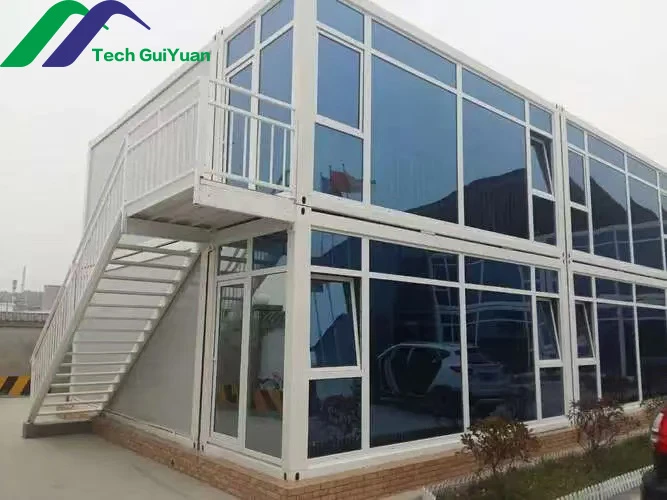

Our Detachable Container Home range is another popular choice. These homes offer flexibility and can be customized to suit your specific needs. And if you're looking for something with a bit more strength, our Detachable Steel Container House is a top - notch option.
If you're in the market for a steel frame container home, whether it's for a permanent residence, a vacation home, or a commercial space, we'd love to talk to you. We can help you figure out the right size and design for your needs, and we'll make sure you understand all the details about the weight and other important factors.
So, if you're interested in learning more or starting the procurement process, don't hesitate to reach out. We're here to make your container home dream a reality.
References
- Construction Materials Handbook: A Guide to Selection, Specifications, and Applications
- Steel Structures Design and Analysis Textbooks


